
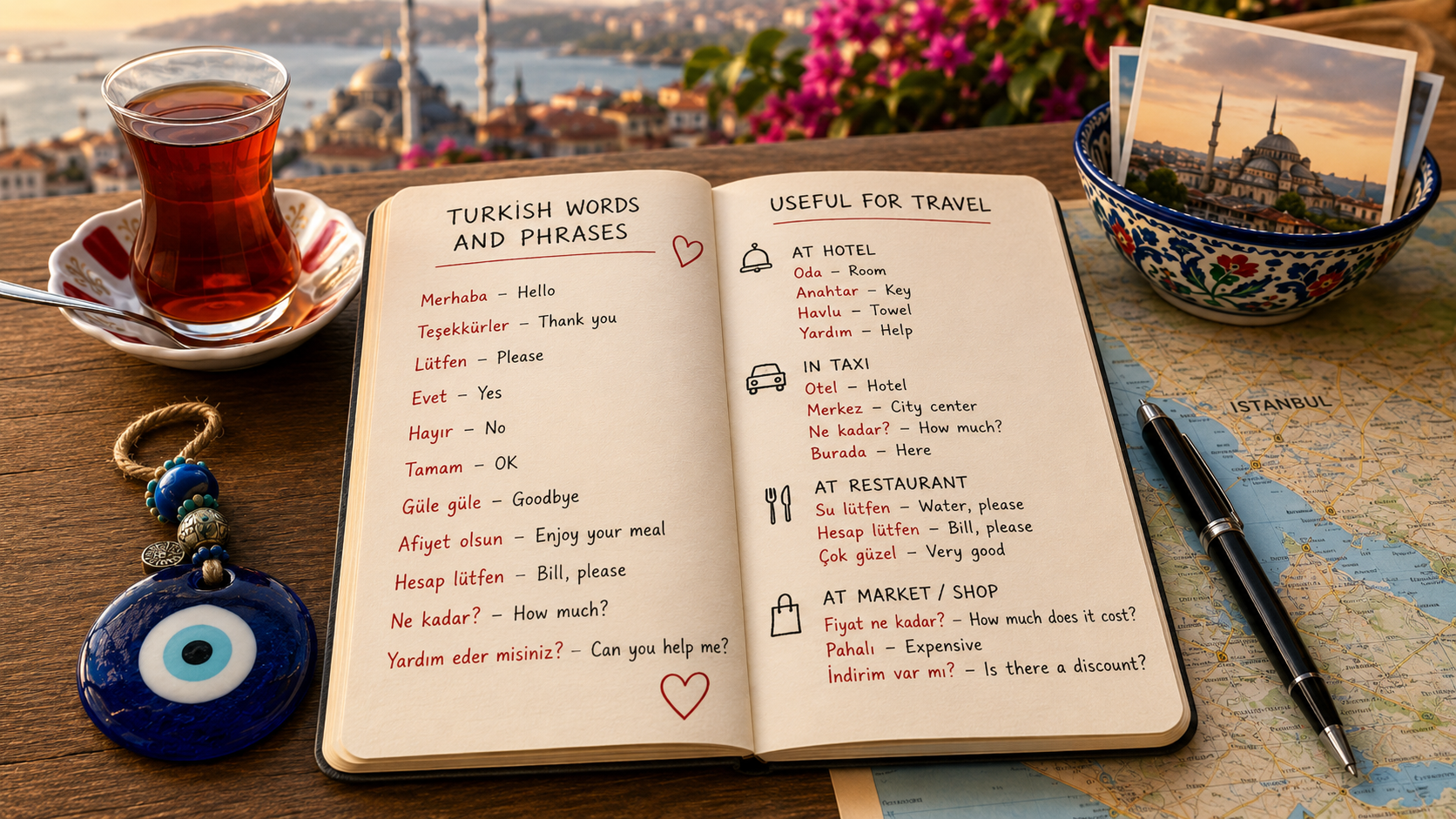
Turkish Words and Phrases
Learn simple Turkish words and phrases that are actually useful when travelling. Helpful for hotels, taxis, restaurants, markets, pharmacies and everyday situations in Türkiye.
About
You do not need to speak Turkish fluently to benefit from a few useful words. In Türkiye, people often appreciate visitors who try to greet, thank or ask simple questions in Turkish. It can make contact with waiters, taxi drivers, shop staff and hotel workers much smoother.
Turkish pronunciation is quite regular once you get used to the letters. Many words are read close to how they are written, but some letters are different from English. C sounds like j in “jam”, ç sounds like ch, ş sounds like sh, and ı is a darker i sound without a dot. Perfect pronunciation is not the goal. Speaking clearly and politely matters more.
The most useful words are often short: merhaba means hello, teşekkürler means thank you, lütfen means please, evet means yes, hayır means no, and tamam means ok. These words alone can help in many everyday situations.
In tourist areas such as Antalya, Alanya, Istanbul, Bodrum and Marmaris, many people speak English, but not everyone does. In smaller towns, local restaurants, dolmuş minibuses, markets, pharmacies and small shops, a few Turkish words can make things much easier.
Where it fits in
This guide is useful before travelling to Türkiye, but also as a practical page to keep open on your phone during the trip. It is especially helpful when ordering food, asking for prices, taking a taxi, shopping at a market or explaining a simple situation.
It is not meant to be a full language course. It is made for regular travellers who want to use simple, safe phrases in real situations. It is better to learn 20 phrases you will actually use than 200 words you forget.
What to expect
In restaurants, phrases such as hesap lütfen for the bill, su lütfen for water, and çok güzel to say something was very good can be useful. They often create a more pleasant interaction with the staff.
In taxis, words like otel, merkez, ne kadar and burada are practical. Otel means hotel, merkez means city centre, ne kadar means how much, and burada means here. Combined with a map on your phone, this is often enough for simple rides.
At markets and in shops, fiyat ne kadar is useful when asking the price. Pahalı means expensive, indirim means discount, and teşekkürler can be used when thanking someone and moving on. In local markets, a polite tone matters more than aggressive bargaining.
At hotels, oda means room, anahtar means key, havlu means towel and yardım means help. If you need assistance, yardım eder misiniz is a polite way to ask for help.
Practical planning
- Save 15 to 25 important phrases on your phone before departure
- Practise the pronunciation of merhaba, teşekkürler, lütfen and hesap lütfen
- Take screenshots of the phrases in case you do not always have internet
- Use Google Translate or similar tools as support, but do not rely blindly on direct translation
- Keep your hotel address written in both English and Turkish if possible
- Learn the words for yes, no, ok, here, how much and help before travelling
- Use short simple sentences instead of long explanations
Tips before you go
- Say merhaba before asking for something
- Use lütfen when asking for something politely
- Speak slowly and point to a map, menu or address when needed
- Do not worry too much about pronunciation, politeness matters most
- Memorise teşekkürler, you will use it often
- In restaurants, hesap lütfen is one of the most useful phrases
- In taxis, always have the destination ready on a map
- At markets, smile and keep the tone calm
- If you do not understand, say anlamadım
- Use tamam when you want to say ok or agreed
Good to know
Turkish people often use small polite expressions in daily life. Kolay gelsin is commonly said to someone who is working, for example in a shop, hotel or service job. Afiyet olsun is used around meals and means something close to enjoy your meal.
Some expressions are used very often even if they do not translate directly. Inşallah means if God wills, but is also used like hopefully. Maşallah is used when expressing admiration or wishing to avoid bad luck. You do not need to use everything yourself, but it helps to understand what you hear.