
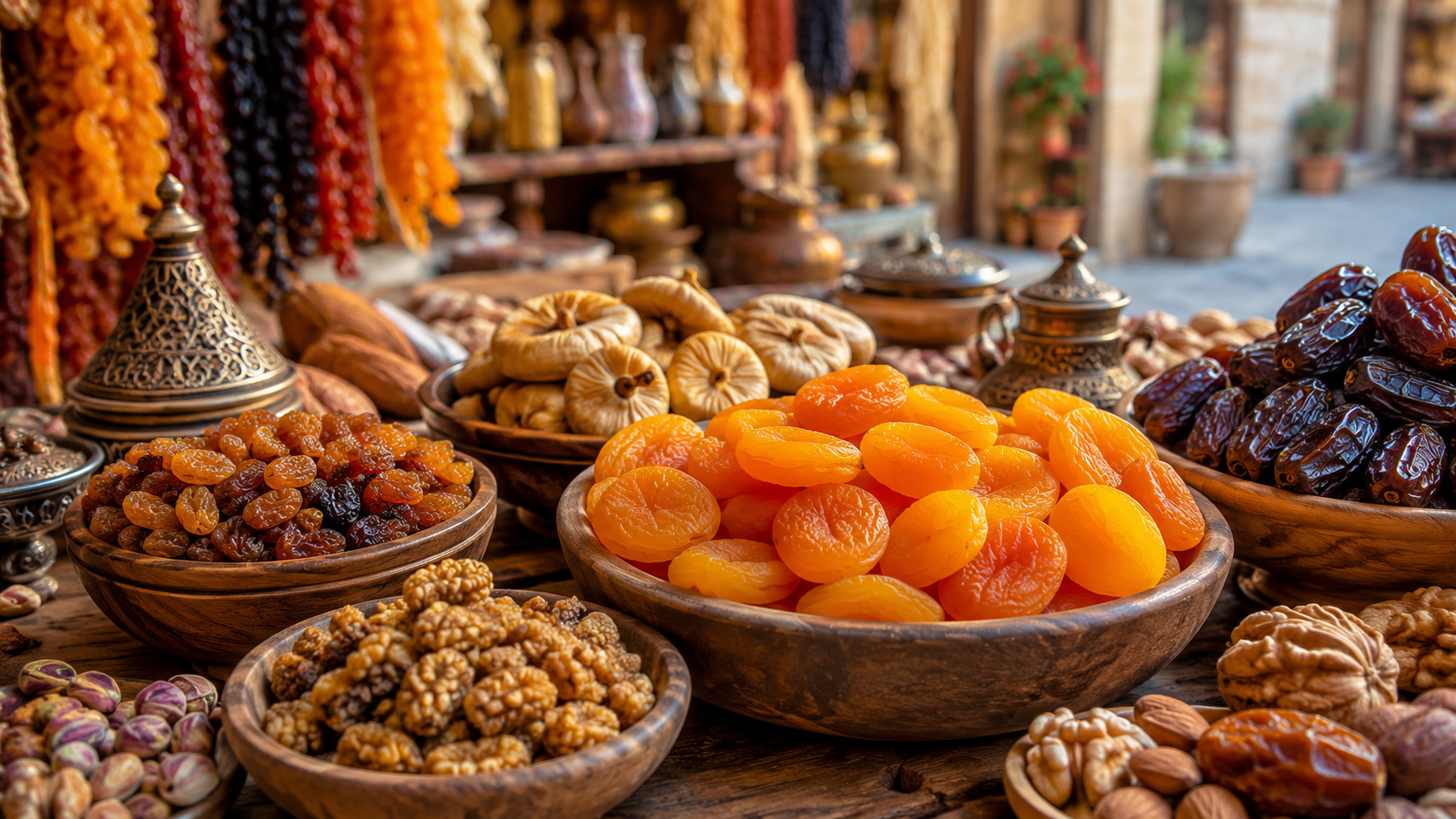
Turkish dried fruit
Türkiye is known for excellent dried fruit, especially figs, apricots, raisins, mulberries and dates. In markets, bazaars and local shops, you can find both everyday products and premium quality worth taking home.
About
Turkish dried fruit is an important part of food culture in Türkiye. It is eaten as a snack, served with breakfast, used in desserts, paired with nuts, enjoyed with tea and offered as a naturally sweet finish after meals.
The best-known types include dried apricots from Malatya, figs from the Aegean region, raisins from Manisa and İzmir, dried mulberries, dates, plums and mixed fruit with nuts. Many shops also sell fruit filled with walnuts, almonds or pistachios.
Quality varies a lot. In tourist areas you can find good products, but also overpriced packages made mainly for visitors. In local nut and dried fruit shops, known as kuruyemiş shops, the selection is often better and you can usually taste before buying.
Dried fruit from Türkiye is practical to bring home. It takes little space, travels well and is more useful than many ordinary souvenirs. It works as a gift, a snack or an ingredient you will actually use.
Where it fits in
Dried fruit fits naturally into a visit to bazaars, local markets, food halls and neighbourhood shops. It is an easy way to experience Turkish food culture without planning a full food tour.
It is also a good choice if you want to bring Turkish flavours home. Good apricots, figs or raisins can be used with breakfast, yoghurt, cheese boards, cakes, salads or simply eaten as a snack.
For travellers interested in food, dried fruit can be bought together with nuts, Turkish tea, spices, lokum, olive oil or honey. This gives you a broader and more practical taste of local food traditions.
What to expect
In bazaars and specialist shops, dried fruit is often displayed in large piles, baskets or glass counters. You can compare colour, size, shine and texture, and many sellers let you taste before buying.
Dried apricots come in both light and darker varieties. The light ones are often treated to keep their colour, while darker sun-dried apricots have a deeper, more caramel-like flavour.
Dried figs are among the most popular products to take home. They can be soft, sweet and rich, and are sold plain or filled with walnuts. Good figs should not be rock hard, overly dry or sour-smelling.
You may also find more local products such as dried mulberries, dried grapes, pestil, köme and fruit-based sweets made with nuts. These are worth trying if you want something less common than standard supermarket products.
Practical planning
- Buy from kuruyemiş shops or local markets rather than only tourist shops
- Ask to taste before buying larger amounts
- Choose vacuum-packed or well-sealed packaging if you are taking it home
- Check that the fruit does not smell old, sour or damp
- Ask for the price per kilo before buying
- Buy small amounts of several types if you are unsure
- Store dried fruit in a cool and dry place after purchase
- Check customs and food import rules in your home country
- Avoid products displayed in strong sun or heavy dust
- Ask for separate packaging if you buy several types
Tips before you go
- Do not buy the first bag you see in a tourist bazaar
- Compare price and quality in several shops
- Choose dark apricots if you want a more natural and stronger flavour
- Choose light apricots if you prefer a milder taste and softer texture
- Buy figs that are soft, but not sticky or fermented
- Try dried mulberries if you want something more local and different
- Pair dried fruit with walnuts, almonds or pistachios
- Ask for solid packaging before your flight
- Do not buy very large amounts unless you know you will use them
- Write down the names of your favourites before going home
Good to know
Some dried fruits may be treated with sulphur to preserve a light colour and longer shelf life. This is common especially for light dried apricots. If you want a more natural product, ask for gün kurusu, which means sun-dried apricot.
Turkish dried fruit is sweet and energy-rich, even when it is natural. It is best used as a snack, topping or ingredient rather than something to eat in large amounts at once.
Prices vary by quality, region and season. Premium products, large figs and nut-filled varieties cost more, but they can also be much better than cheap pre-packed options.