
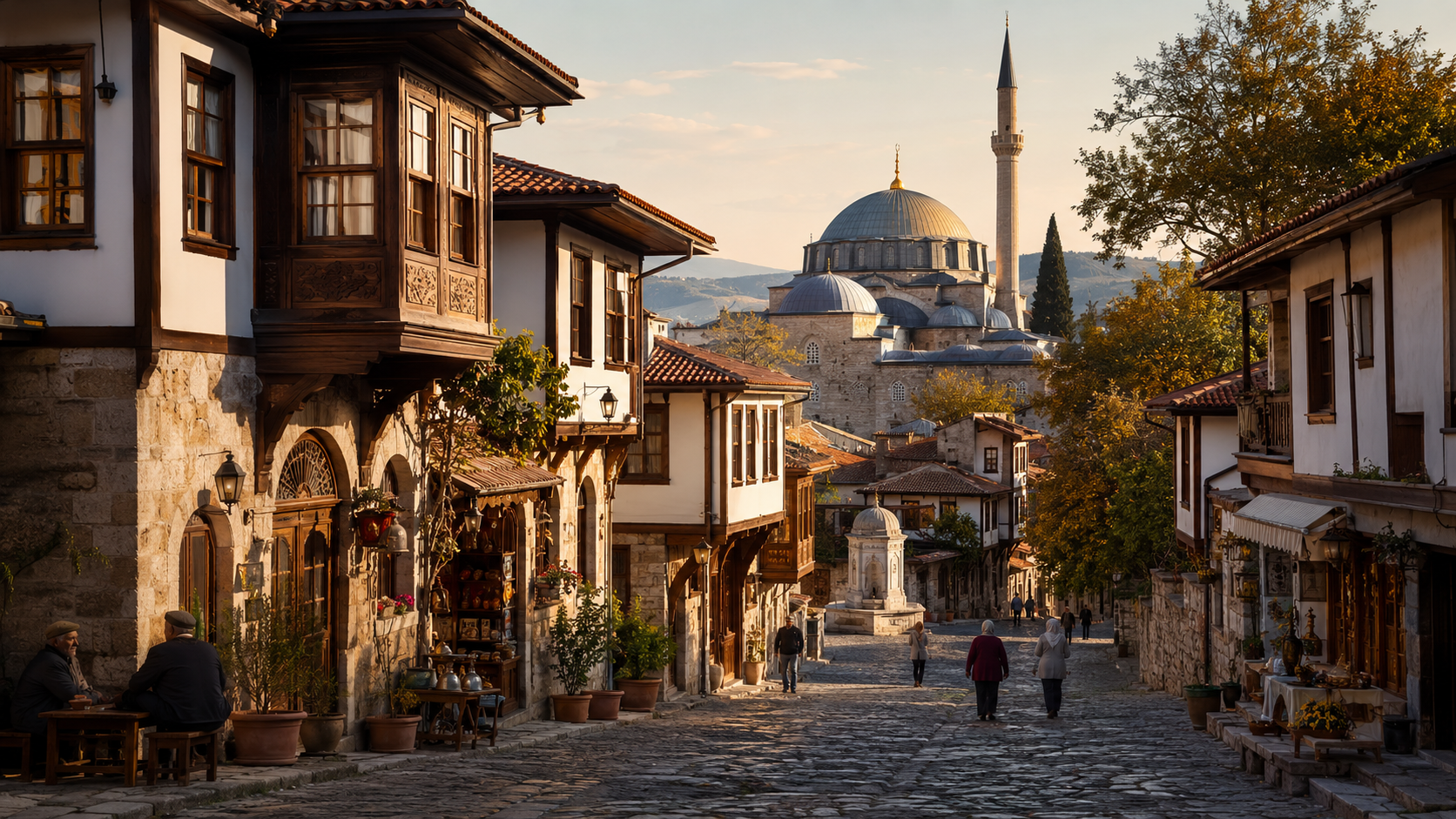
Ottoman cities to visit in Türkiye
Türkiye has several cities where Ottoman history still shapes streets, mosques, bazaars, mansions and old neighbourhoods. These are places for travellers who want architecture, culture, food and historic atmosphere beyond the usual beach holiday.
About
Ottoman history is visible in many parts of Türkiye. It is not only found in Istanbul, but also in former capitals, trading towns, mountain cities and smaller places where mosques, caravanserais, hammams, bazaars and wooden houses still shape the cityscape.
Istanbul is the best-known starting point, with Topkapı Palace, Süleymaniye Mosque, the Grand Bazaar and old districts around Fatih, Eminönü and Üsküdar. But for a quieter and more rounded experience, it is worth looking at Bursa, Edirne, Safranbolu, Amasya, Kütahya, Kastamonu, Tokat, Manisa and Konya.
Bursa was one of the first major Ottoman capitals and offers a clear mix of mosques, tombs, bazaars and old commercial quarters. Edirne was also an Ottoman capital and is especially known for Selimiye Mosque, one of the most important mosques in the country.
Safranbolu is perhaps the best place to see traditional Ottoman wooden houses in a preserved historic town setting. Amasya offers a different experience, with old riverside houses, steep cliffs and a historic atmosphere that feels very different from the coastal resorts.
Where it fits in
A trip focused on Ottoman cities works well as a cultural journey through Türkiye. You can choose one city as a day trip, or build a wider route with several stops if you want to explore history beyond the standard tourist trail.
Istanbul, Bursa and Edirne work well together for a short historical route in the Marmara region. Safranbolu, Amasya, Tokat and Kastamonu are better suited to a slower journey through the northern and central parts of the country.
This is also a good choice if you have already visited Türkiye several times. Once the beaches and the most famous sights have been seen, Ottoman cities give a deeper understanding of the country.
What to expect
In Istanbul, you can visit great palaces, old mosques, bazaars, fountains, hammams and neighbourhoods where Ottoman history is still visible in everyday street life. It is a natural first stop, but the city is busy, so it helps to plan the areas you want to explore.
Bursa offers a more grounded Ottoman experience. You can visit Ulu Cami, Koza Han, old tombs and bazaar areas, while also trying local food such as İskender kebab and chestnut sweets.
Edirne is ideal if you want to see monumental Ottoman architecture without the same pressure as Istanbul. Selimiye Mosque is the main highlight, but the city also has bridges, bazaars, old mosques and a calmer atmosphere.
Safranbolu and Amasya are good choices if you want to walk through old streets and see traditional houses. Safranbolu has a very well-preserved historic centre, while Amasya combines Ottoman houses with a river, cliffs and older history.
Kütahya, Kastamonu, Tokat, Manisa and Konya are suited to travellers who want to go deeper into Turkish history and everyday culture. Here you can find mosques, old markets, ceramics, wooden houses, tombs, Sufi traditions and local food experiences.
Practical planning
- Choose cities by region rather than trying to see everything in one trip
- Start with Istanbul, Bursa or Edirne if this is your first historical route
- Allow at least one full day in smaller cities and several days in Istanbul
- Wear comfortable shoes, as historic centres often have cobblestones and hills
- Check opening times for mosques, museums and palaces
- Dress respectfully when visiting mosques
- Bring cash for small shops, tea houses and local markets
- Plan transport between cities in advance
- Combine historical stops with local food and bazaar visits
- Choose a hotel in or near the old town if you want to walk more
Tips before you go
- Visit popular sights early in the day
- Read a little about each city’s Ottoman role before arriving
- Do not only visit the main monuments, explore the side streets too
- Try local specialities in each city
- Take time for tea in old hans or bazaar areas
- Ask before photographing people or inside small shops
- Avoid an overly tight schedule, historic cities are best enjoyed slowly
- Check whether some mosques are under restoration
- Use local guides if you want to understand the architecture better
- Bring a light jacket outside summer, especially in inland cities
Good to know
Ottoman heritage in Türkiye is not the same in every city. Some places have major monuments and palaces, while others are mainly known for old houses, markets, crafts and quieter historic neighbourhoods.
Many of these cities are still ordinary Turkish cities, not open-air museums. This makes the experience more authentic, but also less polished than in major tourist destinations.
To get the most out of the trip, combine architecture with food, bazaars and everyday life. The Ottoman cities are often most interesting when experienced as a whole.