
Anıtkabir
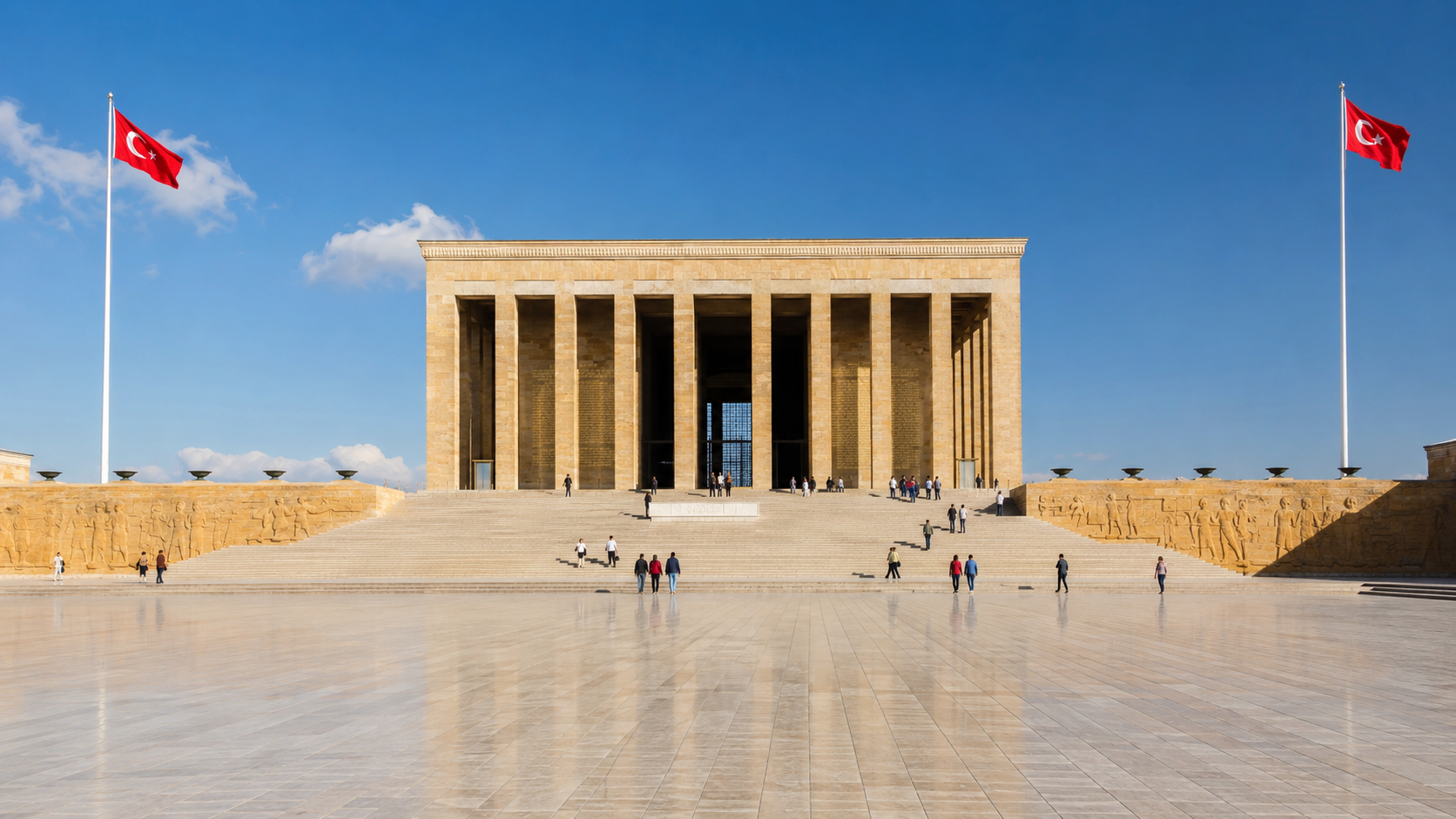
Anıtkabir in Ankara is the mausoleum of Mustafa Kemal Atatürk, the founder of the Republic of Türkiye. It is one of the country’s most important national memorials and a key place for understanding modern Turkish history.
About
Anıtkabir is the mausoleum of Mustafa Kemal Atatürk, the founder of the Republic of Türkiye and the country’s first president. The monument stands on a hill in Ankara and is one of the most visited and symbolic places in the country.
It is more than a tomb. Anıtkabir includes large open squares, ceremonial walkways, monumental buildings, museums, reliefs, lion statues and views over parts of Ankara. Everything is designed to create a solemn and respectful setting.
For Turkish people, Anıtkabir is a national memorial. Many come here to pay respect, lay flowers, attend ceremonies or learn more about the history of the republic. For foreign visitors, it gives a clear introduction to why Atatürk still has such a strong place in Turkish public life.
A visit should not be rushed. It is best to allow time for the mausoleum itself, the museum, the long ceremonial walkway and the surrounding area. The atmosphere is calm, formal and respectful.
Where it fits in
Anıtkabir fits naturally into any visit to Ankara. If you only have limited time in the city, this is often the most important historic place to prioritise.
The visit can be combined with central Ankara, Kızılay, Ulus, Ankara Castle, the Museum of Anatolian Civilizations and older neighbourhoods. This gives you both modern republican history and older Anatolian history in the same trip.
For travellers who usually visit Istanbul, Antalya or the coast, Anıtkabir gives a different view of Türkiye. Ankara is more political, administrative and closely connected to the republic, and Anıtkabir is the key place for understanding that.
What to expect
The visit often begins with the long ceremonial road, Aslanlı Yol, lined with lion statues. The wide walkway creates a calm and solemn entrance to the site.
The mausoleum itself stands beside a large ceremonial square. The building is monumental, restrained and powerful, with symbols connected to the early history of the republic and Atatürk’s role.
In the museum, you can learn more about Atatürk’s life, the Turkish War of Independence, the founding of the republic and political reforms. Exhibits include personal items, documents, photographs, models and historical displays.
You may also see guard changes and ceremonies, depending on the time and day. On national days and 10 November, the anniversary of Atatürk’s death, very large numbers of people gather here.
Practical planning
- Allow at least 1.5–2 hours for the visit
- Arrive early in the day if you want calmer conditions
- Check opening times before you go
- Wear comfortable shoes, the area is large and involves walking
- Bring water in warm months
- Show respect in clothing, behaviour and photography
- Allow time for security checks at the entrance
- Avoid busy national days if you dislike large crowds
- Combine the visit with other historic places in Ankara
- Use taxi or public transport depending on where you stay in the city
Tips before you go
- Read briefly about Atatürk before visiting
- Do not treat the site like an ordinary tourist attraction
- Walk calmly through the area and allow time for the museum
- Take photos discreetly and respect signs
- Avoid loud behaviour in the ceremonial area
- Come without large bags if you want to pass security faster
- Check the weather, much of the visit is outdoors
- Choose a weekday if you want fewer crowds
- Look for guard changes if you are interested in ceremonies
- Take time to enjoy the views over Ankara from the site
Good to know
Anıtkabir has strong symbolic importance in Türkiye. For many Turkish people, it is not only a historic monument, but also a place of respect, identity and national belonging.
The visit is easy to do on your own, but you will get more from it if you know a little about Atatürk, the War of Independence and the transition from the Ottoman Empire to the republic.
On commemorative days, the area can become very crowded. This can make the visit more powerful, but also means longer queues, more security and less quiet than on regular days.